
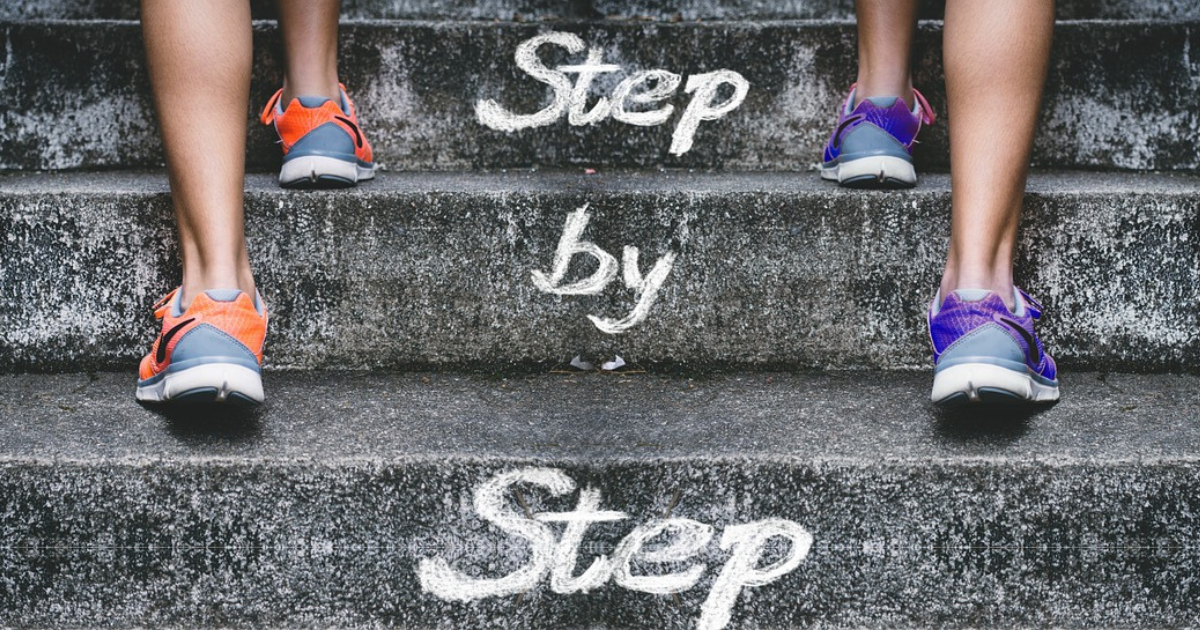
The Power of Small Steps in Business
“Everything can be achieved through gradual steps – one small step at a time: overcoming fears, fulfilling dreams… anything you wish to be different from the way it is. If you concentrate on small, manageable steps you can cross unimaginable distances.” Anonymous
So many Business Owners are in search of that ‘one thing’ that will bring transformational change to their business success. Very few small or medium businesses could actually accommodate a single transformational change. The size of that one change would need to be substantial in order to deliver the type of results to meet the expectation.
The answer lies not in big, but rather in small steps. It requires many of them. The power of small steps in business cannot be underestimated. Small steps, when consistently and strategically taken, can lead to significant business transformation and growth.
Plan for Incremental Progress
The desired strategy should be one of incremental progress where each small step represents a meaningful change, and where this change can be embedded and sustained. This is the idea of a ‘step up’ or a ‘step forwards’. Creating sustainable change is the challenge, as this requires effort after the implementation of the change, and invariably it requires new or improved processes and systems to be implemented to support the change
Plan for Business Improvement
Even in incremental change based on small steps one needs to think things through. You need to plan for business improvement [the outcome], and so you need to clearly define what specific thing needs to improve. This then necessitates understanding cause and effect. What specifically will need to be changed to directly create the required change effect. It may appear obvious, but lack of clarity in this planning stage is why many changes are implemented, but fail to deliver the required results.
Execute in a Step-by –Step Approach
Very few significant changes will be executed in one day. There will always be a timeline for change as you have to continue to manage the business at the same time as designing and implementing change.
This is going to mean that you allocate time to designing and implementing in a number of discrete steps. Each step needs to represent progress. Even if each progressive step is not something that can be used in isolation, it can still be used as ‘people or organisational change management’. These are small ‘proofs’ to yourself and your team that something has been accomplished, and that ‘change is happening’. These ‘step by step’ proofs are an important part of taking your team on the journey with you.
 There are multiple ways in which small steps can have a profound impact on a business:
When you implement business improvement through small steps, you do not only achieve the direct benefit of the change, you will also achieve multiple compounding and indirect benefits in one or more of the following areas:
Long-Term Vision: Small steps should be aligned to your long-term vision. If it does not enable your vision, why are you doing it? Over time, these small steps collectively move a business closer to its ultimate goals and objectives, ensuring that transformation is purposeful and in line with the company’s vision.
Momentum: Small steps create momentum. When businesses consistently achieve small goals, it builds a sense of achievement and motivation. Over time, this momentum can drive significant transformation.
Innovation: Small, experimental steps can lead to ground breaking ‘accidental’ innovations. By encouraging employees to experiment and think creatively, businesses can stumble upon new ideas and approaches that transform their businesses.
Continuous Improvement: By making incremental changes and refinements to processes, products, and services, businesses can refine their operations over time. This leads to increased efficiency, reduced waste, and better overall performance.
Change Culture: Small steps encourage a culture of continuous improvement. The continuous improvement ‘change culture’ ensures that Business Owners and employees alike do not get stuck in a rut.
Adaptation to Change: In a rapidly changing business environment, small steps enable a company to adapt more quickly. Businesses that are agile and responsive to market changes are better positioned for long-term success.
Employee Engagement: Small, achievable goals can boost employee morale and engagement. When employees see progress and positive outcomes from their efforts, it can lead to more motivated and productive employees.
Risk Mitigation: Taking small steps allows businesses to test new ideas or strategies with lower risk. If a small-scale initiative fails, the losses are minimized, and valuable lessons can be learned without jeopardizing the entire operation.
Efficient Resource Utilization: Small steps often require fewer resources, making them more feasible for businesses with limited budgets. Allocating a small amount of additional work to complete the next small step is efficient resource allocation can lead to improved financial stability and sustainability.
Data-Driven Decision-Making: Small steps allow businesses to collect data and feedback on the completion of each stage or step. This data can be used to inform decision-making, refine strategies, and make evidence-based choices for future growth.
Customer Satisfaction: Incremental improvements in customer experience, product quality, or service delivery can lead to higher customer satisfaction and loyalty. You want to have your customers saying that you are either consistent, or improving. Satisfied customers are more likely to recommend a business to others and become repeat buyers.
Building Trust: Consistently meeting and exceeding small goals and commitments through small measured steps builds trust with customers, partners, and stakeholders. Trust is a critical asset for any business, as it fosters positive relationships and opportunities for collaboration.
In conclusion, the power of small steps lies in their ability to create a path to significant business transformation. By embracing a philosophy of continuous improvement, adaptability, and agility, businesses can achieve sustainable growth, foster innovation, and enhance customer satisfaction. Small steps are the building blocks that, when carefully and strategically assembled, can lead to remarkable business success and transformation.
Get in Touch (https://40megahertzconsulting.co.za/paul-steel-contact-us-generic-form-2023/)
Our entire philosophy to helping businesses is around ‘continuous improvement’ and ‘performance improvement’ through small steps.
You do not know just how much our coaching, consulting, or mentoring, might be of value to you in your business journey, until you try it.
We would not expect you to jump straight in without knowing more, but we would expect you to use that “open mind-set” to at least ask some questions and explore some new ideas.
Our purpose is to help you to make an informed decision, whichever option you chose.
Nothing ventured, nothing gained.
paul@40megahertzconsulting.co.za
Mobile: (27) 69 365 2984
www.40megahertzconsulting.co.za