
by Paul Steel | Feb 12, 2024 | Articles, Goal Setting, Planning, Reviewing
One of the most fascinating true life stories about the crucial role of planning emerges from the race to the South Pole in 1911. This was the race between the successful expedition led by Norwegian explorer Roald Amundsen and the failed one led by Robert Falcon Scott.
 In theory, setting off within days of each other, it should have been a perfectly matched competition. Both men were similar ages, and each could boast plenty of experience in polar exploration, and they both faced the similar hazardous weather conditions.
So why did Amundsen succeed where Scott and his entire team perished and died? As you continue to read, you should note that Scott’s preparation paled in comparison, and significant differences in their planning emerged.
- Amundsen adopted an intensive and long-term fitness regimen. He travelled more than 3,000 kilometres from Norway to Spain by bicycle.
- He planned for scenarios he might only face once in a lifetime, such as testing the usefulness of raw dolphin as a source of nutrition.
- Amundsen used pre-prepared navigation sheets that simplified the calculations when they were tired and cold. Four out of his team of five were qualified navigators. Amundsen’s expedition used a sextant during the journey, which is a relatively light and simple piece of equipment. He also prepared by attended a symposium on how to fix position at high latitudes.
- Scott used a theodolite which is heavier and requires more mental arithmetic. Scott also lacked navigators opting for only one per team. Scott dismissed a request for navigational training.
- Amundsen studied the Inuit people in northern Canada and discovered how it was better to move slow and steady in cold conditions so that sweat couldn’t form and turn to ice.
- Amundsen learned that dogs thrive in Antarctic conditions and spent time with the Inuit people in the north of Canada where he learned to dogsled.
- Scott selected a mixture of ponies entirely unsuited to Antarctic conditions, and motor sledges, which were brand new, and untested. Scott also chose to completely exclude the motor sledge engineer from his expedition party.
- One of the original 3 motor sledges was lost through thin ice on unloading it from the ship. The two remaining motor sledges failed early in the main expedition and were abandoned.
- Amundsen used canisters that left his sledges permanently lashed and loaded. Scott’s team had to unload, and load, and re-lash their sledge at every camp, no matter what the weather.
- Nansen, the most famous explorer of the day, told Scott to take “dogs, dogs and more dogs”. Scott’s team had to pull their sledges themselves, moving far more slowly and exhausting themselves along the way.
- Amundsen camped on the Ross Ice Shelf at the Bay of Whales, which is 96 km closer to the pole than Scott’s camp.

- Scott’s chose his base at Cape Evans on Ross Island. He did so based solely on his previous geological expedition in the same area. However, he knew it to be a poor route to the pole due to ice melting, and having to make detours due to its crevasses. Both meant a longer journey.
- Amundsen’s route was through unknown land, and Scott’s route was largely the same as that charted previously by Shackleton.
- Amundsen laid down supply caches along the route, at very short and regular intervals. He then marked them with black flags to be visible from miles away on their way back.
- Amundsen stored 3 tons of supplies for a 5 man starting team. Scott stored just 1 ton of supplies for 17 men. It would be the end for Scott’s team if he missed even one of his stock supplies.
- Scotts’ daily supplies and haulage had to include fuel for the motor sledges, and fodder for the ponies, while Edmundsen’s dogs could survive on the plentiful seal and penguin meat.
- Amundsen carried enough extra supplies that he would be able to miss every one of his stock supplies and still complete the journey.
- Amundsen brought four thermometers. Scott brought one, which broke.
- Amundsen recruited a team of well experienced Norwegian skiers. Nansen had also advised Scott that he should train his expedition team to ski, but although a few began to learn, Scott made no arrangements for compulsory training for the full party.
- On his return trip, Scott chose to man-haul 14kg of rock samples. This highlights the confusion over purpose and objective. A geological expedition vs a discovery and survival expedition.
- With a starting team of 65, Scott lost five men including himself returning from the pole.
- Amundsen and his entire team of just 19 men returned to Norway safely.
On 15 December 1911, Amundsen and his team planted the Norwegian flag in the South Pole. Scott was still 360 miles from the pole, man-hauling sledges, and it took another 34 days to get there. When Scott arrived at the pole, Amundsen was only 8 days from his return to home base.
Amundsen’s expedition returned to base camp after 99 days enroute and no casualties. [Note that this is pretty close to our recommended 90 Day Plan 🙂 ]. The approximate date of Scott dying was 150 days after embarking.
It will surprise many readers that on an epic journey into the unknown, and fraught with challenges, Amundsen reached home base precisely on the day they planned.
Scott appears to have operated, hoping everything would work out. In his journal, discovered with his frozen body years later, Scott complained about his “bad luck”.

In this epic story, some fundamentals of planning are brought home:
- For Scott and Amundsen, their results were directly aligned to the quality of their planning.
- Scott set himself up for failure. Amundsen set himself up for success.
- On reflection, Amundsen’s plan seems clear, logical, and obvious, while Scott’s plan was questionable from the outset.
- Amundsen invested well in preparation, and focussed on being able to execute his plan with speed.
- Amundsen’s planning was future-proofed through ‘what if’ scenarios with plans B, C, and D.
- A clear roadmap and a documented plan forces accountability and responsibility.
- Plans require adaptability. This is OK. Accept this and follow your new plan.
- Risks can be turned into opportunities, but you need to have identified them as risks first; otherwise, they’ll come at you as a crisis, and then you’re on the back foot. Scott’s expedition was in crisis mode almost from the outset.
- The ‘weight’ of a decision is reduced when you’ve had time to consider and calculate its upside and downside. This is the upside of investing time in planning.
While I’m not suggesting that you trek to the South Pole to test your planning abilities (J), look at your current priorities, projects, goals, targets, and ambitions and ask… Am I failing to plan or planning to fail?
Click here to find out more about how we can assist with your planning.
Get in Touch
You do not know just how much coaching or consulting might be of value to you in your business journey, until you try it.
We would not expect you to jump straight in without knowing more, but we would expect you to use that “open mind-set” to at least ask some questions and explore some new ideas.
Our purpose is to help you to make an informed decision, whichever option you chose.
Nothing ventured, nothing gained.
paul@40megahertzconsulting.co.za
Mobile: (27) 69 365 2984
www.40megahertzconsulting.co.za

by Paul Steel | Jan 11, 2024 | Articles, Reviewing
Why Review
Do you remember what you had for breakfast on the 5th of last month? Probably not. We sometimes forget what we ate for breakfast by the end of the day!
A “photographic memory” is extremely rare, no one is perfect and memories fade. That’s why it’s so important to review. Reviewing takes what we’ve experienced or learned and elevates it from short-term to long-term memory.
Beyond just memory, reviews are valuable for their ability to teach. If we immediately move on from each experience, how can we learn from our mistakes and successes? So often we hear “my staff just don’t learn”. They make the same mistakes over and over again. This is why you need to take time to review. You need to test that the lessons were learnt.
Is reviewing important in your business? It’s essential! The regular reviews are what helps your company to constantly improve.
Very few businesses can honestly claim that they have succeeded to achieve all of their targets and objectives whether for the week, month or year. Even by the smallest margin, if you did not succeed then you failed. But that is not a bad thing. It’s about how you look at the failings or short comings that makes the difference. Every failure should be seen as an opportunity to improve. Even if you missed your target by just 10%, acknowledge the failure, and seize the opportunity to improve by another 10%.
The common response to failures and mistakes is to “deal with it and move on”. We tell ourselves that we don’t have the time … to properly review. Ironically we always find the time to fix it and deal with it again when it goes wrong again.
The issue is that in order to find out how to improve, you need to review. Reviewing might be painful at times, but it is the door to truly learning lessons from the past.
So often when a mistake is made the immediate response is to allocate blame, to reprimand, and even apply discipline. While at times some of this might be necessary and appropriate, it stops there. Business Owners and managers fall short on reviewing, and asking why did it actually happen, and what needs to be done to address the root cause, such that it does not happen again, and we actually improve.
You may well have heard people comment that just because someone has been doing a job for 30 years, does not mean they are good at it. They just have 30 years of experience at making the same mistakes. Is that the legacy for your business? 5 or 10 years of just making the same mistakes over and over again? Surely not.
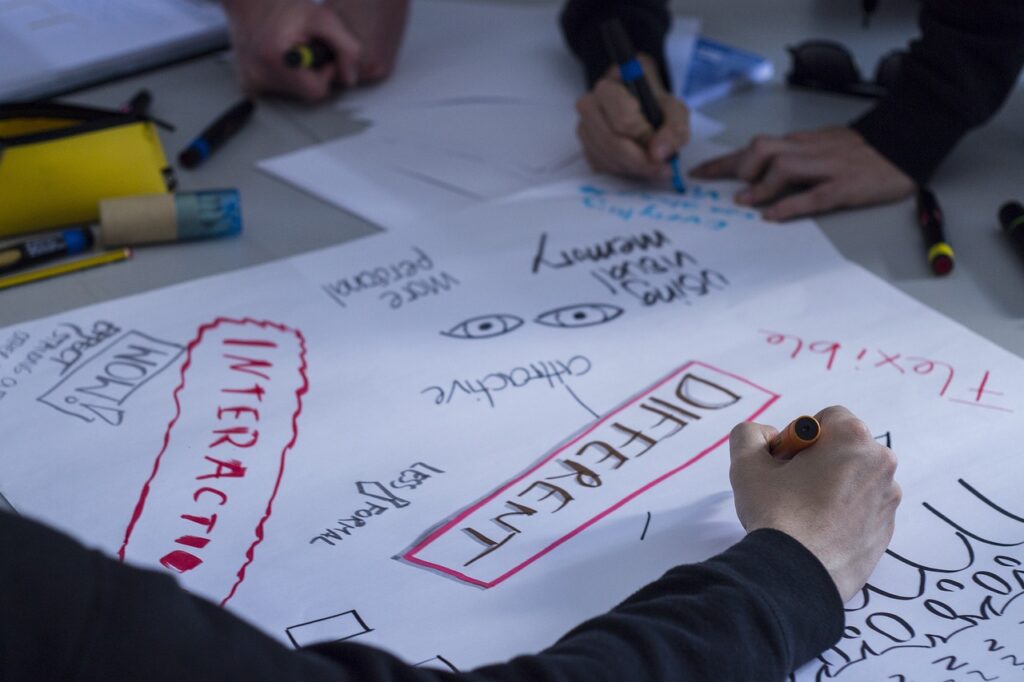
Think about your processes. How well do you know them? Having them documented is important, but do you review that documentation to make sure you’re following through?
Can the person that you have just taught, easily teach others how they work?
How well are your systems working? Do they need to adapt or be replaced to fit changing needs? These are things you find out as you review.
Reviews also help your business to correct mistakes and capitalize on successes. Did a project not get completed on time? Review to find out what happened. Did your marketing team have a lot of success last quarter? Find out what strategies they used and how they can be implemented going forward.
Reviews are a great performance tool. Get you team to talk you through the use of a system or process. Ask them to highlight the critical points. Ask them to list all the critical standards that are applicable. This is a fast way to understand what your team know, and don’t know. If they don’t know it …they are less likely to do it.
So if you haven’t done so already, make sure you schedule a little bit of time each day to review.
Get in Touch
You do not know just how much coaching or consulting might be of value to you in your business journey, until you try it.
We would not expect you to jump straight in without knowing more, but we would expect you to use that “open mind-set” to at least ask some questions and explore some new ideas.
Our purpose is to help you to make an informed decision, whichever option you chose.
Nothing ventured, nothing gained.
paul@40megahertzconsulting.co.za
Mobile: (27) 69 365 2984
www.40megahertzconsulting.co.za

by Paul Steel | Nov 17, 2023 | Articles, Business Coaching, Goal Setting, Learning and Development, Mind Set
The Crucial Role of Mind-Set in Business Success
In the fast-paced and competitive world of business, success is not solely determined by the products you offer or the strategies you employ. It is your growth mindset that often makes the crucial difference between triumph and failure. A growth-oriented, resilient, and positive mind-set can be the driving force behind your success.
What is growth mindset?
A mind-set refers to a person’s established set of attitudes, beliefs, and thought patterns that shape their perception of and approach to various aspects of life, including their views on themselves, others, situations, challenges, and opportunities.
Mind-sets can be either fixed (Closed) or growth-oriented (Open).
- A fixed mind-set is characterized by a belief that abilities and traits are static and unchangeable
- A growth mind-set involves the belief that abilities and traits can be developed and improved through effort, learning, and perseverance.
Mind-sets therefore play a significant role in influencing an individual’s behaviour, responses to challenges, and overall outlook on life.
8 areas where growth mindset makes the difference
- Resilience and Adaptability: Business is full of challenges and uncertainties. Having a growth mind-set means embracing challenges as opportunities to learn and adapt. When you encounter setbacks, a growth mind-set enables you to bounce back, learn from your mistakes, and persevere. This resilience is invaluable in navigating the inevitable hurdles of entrepreneurship.
- Innovation and Creativity: A growth mind-set encourages creativity and innovation. It allows you to think outside the box, explore new ideas, and take calculated risks. This willingness to innovate can set you apart in a competitive market, leading to the development of unique products or services that attract customers and drive success.
- Emotional Intelligence: Success in business often hinges on effective relationships with customers, partners, and employees. A positive mind-set fosters emotional intelligence, enabling you to empathize, communicate effectively, and build strong, lasting relationships. These interpersonal skills can be the foundation of a successful business network.
- Goal Setting and Persistence: An entrepreneur with a growth mind-set sets clear and ambitious goals. These goals serve as motivation and a roadmap for success. They also understand that achieving these goals may take time and effort, and they are willing to persist even when faced with obstacles.
- Self-Belief and Confidence: Confidence is a key factor in business success. A positive mind-set fosters self-belief and confidence in your abilities. It empowers you to take risks, make tough decisions, and believe in your vision even when others doubt it. This self-confidence can be a driving force behind your achievements.
- Learning and Development: A growth mind-set thrives on continuous learning and improvement. In the ever-evolving business landscape, the ability to acquire new skills, adapt to changes, and stay ahead of the curve is critical. Entrepreneurs with this mind-set are open to seeking knowledge and self-improvement.
- Handling Failure and Feedback: Failure is a part of every entrepreneur’s journey. A positive mind-set allows you to view failure as a valuable learning experience rather than a setback. Additionally, it encourages you to seek and welcome constructive feedback, which can lead to necessary adjustments and improvements.
- Decision-Making: Your mind-set greatly influences your decision-making process. A growth-oriented mind-set helps you make rational and informed decisions, taking calculated risks when necessary. It also prevents you from making decisions based on fear or a fixed mind-set that resists change.
In conclusion, the importance of mind-set in business success cannot be overstated. Your mind-set shapes your attitudes, behaviours, and actions, which, in turn, determine the outcomes you achieve.
Cultivating a growth-oriented mind-set is a lifelong journey, but it is an investment that can pay off immensely in your entrepreneurial endeavours. By embracing resilience, innovation, emotional intelligence, and other key aspects of a growth mind-set, you can propel yourself towards greater success in the dynamic world of business.

The Connection between Coaching and Mindset
Coaching can be a powerful tool in helping individuals develop and cultivate a growth mind-set. Here are several ways in which coaching can assist in fostering a positive and growth-oriented mind-set:
Increased Self-Awareness: Entrepreneurs become more self-aware, enabling them to recognize their existing mind-set and any limiting beliefs they may hold. Through self-reflection and feedback from the coach, individuals can gain insight into their thought patterns and attitudes.
Challenge Limiting Beliefs: Coaches work with individuals to challenge and reframe limiting beliefs that may be holding them back. They encourage clients to question their fixed mind-set beliefs and replace them with more growth-oriented perspectives.
Setting and Achieving Goals: Coaches assist individuals in setting clear and ambitious goals. This goal-setting process encourages individuals to adopt a growth mind-set by emphasizing the importance of effort, learning, and perseverance in achieving those goals.
Accountability and Feedback: Accountability and constructive feedback are the cornerstone of growth and change. This accountability keeps individuals on track to take action toward their goals, while feedback helps them learn and grow. Constructive feedback can also challenge existing beliefs and encourage a more flexible mind-set.
Strategies for Resilience: Entrepreneurs will inevitably require strategies for resilience and coping with setbacks. The coach often helps with techniques for handling failure, adversity, and stress in a way that promotes learning and growth, rather than a fixed mind-set that sees these challenges as insurmountable obstacles.
Building Self-Confidence: Observation should tell you that self-confidence and self-belief are fundamental to success. This increased confidence through coaching can support a more positive and growth-oriented mind-set, empowering individuals to take risks and overcome self-doubt.
Skills Development: Coaches often provide guidance on developing specific skills, which align with a growth mind-set. By acquiring new skills and competencies, individuals can reinforce their belief in personal development and continuous improvement.
Positive Reinforcement: Your coach is the objective outsider who is always on your side, offering positive reinforcement and encouragement, celebrating achievements and milestones along the way. This positive feedback can reinforce the idea that effort and growth lead to success.
Reflection and Visualization: Self-reflection and visualization exercises are powerful tools in coaching. This can help entrepreneurs to imagine a future in which they have achieved their goals and this instils a sense of possibility and optimism.
In summary, coaching can be a valuable resource for entrepreneurs. Generally entrepreneurs do not think about mind-set as they go about their business, but an increased level of self-awareness in regard to their mind-set can help to overcome barriers that they did not even know existed, unleashing their full potential.
By working with a coach, entrepreneurs can actively work on changing their mind-set to one that is more conducive to success and personal growth.
Get in Touch (https://40megahertzconsulting.co.za/paul-steel-contact-us-generic-form-2023/)
You do not know just how much coaching might be of value to you in your business journey, until you try it.
We would not expect you to jump straight in without knowing more, but we would expect you to use that “open mind-set” to at least ask some questions and explore some new ideas.
Our purpose is to help you to make an informed decision, whichever option you chose.
Nothing ventured, nothing gained.
paul@40megahertzconsulting.co.za
Mobile: (27) 69 365 2984
www.40megahertzconsulting.co.za

by Paul Steel | Nov 17, 2023 | Accountability, Articles, Business Coaching, Goal Setting, Mentoring
The Benefits of hiring a Business Coach
The term “business coach” has regrettably become watered down and devalued, as one can now find a ‘coach’ for almost every subject under the sun. In many coaching businesses, the Business Coaching model has evolved into focusing on packaging business education and coaching, with the primary focus on business education, and often limited or no focus on actual coaching.
The value of ‘coaching’ in ‘business coaching’ is therefore marginalised. At 40-Megahertz Consulting, we believe in stripping away the business education so that our customers can benefit from the true benefits of coaching – removing barriers and unlocking potential.
To the extent that the coaching works for both the coach and the client, the coaching relationship can then be one or more sessions, or it can be a lengthy relationship – as long as it adds value. This should be the choice of the client.
The breakthrough, perspective, or insight that the client requires to help them move forward, can be achieved in a single session. It is possible. However, it is more common that the underlying issues are more complex, and unwinding years of attitudes, beliefs, and behaviours, can require multiple sessions with a coach.
Hiring a business coach for pure coaching [and excluding the business education] can offer a wide range of benefits for entrepreneurs.

Do I need a Coach?
Take a look at top athletes like Roger Federer, or Lewis Hamilton [just to mention 2]. They are at the pinnacle of their respective games. Bill Gates – also at the pinnacle in business. They all have coaches. The role of the coach or business coach in success for these people is multi-dimensional.
- The burning desire to go from good to best. Finding and tapping into that elusive extra 20%
- Stay at the top. Sustaining success for as long as possible.
- Re-inventing and innovating. A key component of staying ahead.
What this suggests is that if your belief system is that what you have in your business is ‘good enough’, then Business Coaching is unlikely to be a good option for you.
If you have a sense of frustration with your current business status [good or bad], and you still have the belief that you can do more, you have a burning desire to achieve more, you have a passion for learning more, and doing more, then Business Coaching is a great option to explore, to make those dreams come true.
Here are some of the key advantages of having a Business Coach:
As you read through these advantages, give some consideration to how one or more of these might help you to move forward in your business. Also consider the question: “what would I want from my business coach?”
Coaching should be about you and what you need from the relationship, and as you consider the idea of a business coach, give though to “what I need” vs “what they are offering” this is one area where you will need a good fit.
Clarity of Thinking: Managing your business can be overwhelming, confusing, frustrating, and stressful, all of which make it difficult the ‘think straight’. One of the biggest benefits of the coaching relationship is being able to rise above ‘the fog’ and regain clarity of thinking. The seemingly impossible is simplified, and all things seem possible again.
Personalized Guidance: Business Coaches provide one-on-one guidance tailored to your specific needs and goals. They can help you address challenges and opportunities unique to your business, ensuring the advice and strategies are relevant to your specific situation.
Solution Development: Coaching is not directed at providing answers, but rather at helping entrepreneurs to discover and implement their own answers. There are, however, often when entrepreneurs are just looking for some answers in order to move forwards. Depending on your choice of Business Coach, some coaches can extend their skill set into consulting, and actually advising on answers, or building solutions.
Accountability: A business coach holds you accountable for your actions and commitments. This accountability can be a powerful motivator to help you stay on track and make progress toward your goals. Building a rhythm of ‘keep moving forward’, adds enormous value in overcoming confusion, uncertainty, indecision, and procrastination.
Objective Perspective: Coaches provide an objective, outside perspective on your business. They can identify blind spots, offer honest feedback, and challenge your assumptions, helping you to make more informed decisions.
Mentor: Business Coaches often have extensive knowledge and experience in various aspects of business, from leadership and management to marketing and sales. As a mentor they can share their expertise and insights, helping you avoid common pitfalls and make better informed choices.
Increased Confidence: Due to factors such as increased clarity, broader options, and better decision making, working with a business coach can boost your self-confidence and self-belief, empowering you to take risks, make decisions, and tackle challenges with greater assurance.
Skill Development: Coaches can help you develop specific skills and competencies, whether it’s leadership, communication, time management, or problem-solving. This professional growth and development can enhance your effectiveness as a business leader.
Stress Reduction: Coaches can help you manage stress. Better time management, and general effectiveness, will help you to maintain a healthy work-life balance. They provide tools and techniques for handling the pressures of entrepreneurship and reducing burnout.
Motivation and Inspiration: Coaches can provide motivation and inspiration to help you stay focused on your goals and overcome obstacles. They can be a source of encouragement during challenging times.
Goal Setting and Achievement: Your Business Coach can assist in setting clear, achievable goals and developing strategies to reach them. A key component of this is clarifying the vision, and the key milestones that need to be achieved.
Improved Communication: Coaches can help you enhance your communication skills, whether it’s with your team, customers, or stakeholders. Effective communication is crucial in business, and a coach can provide valuable insights and guidance in this area.
Networking Opportunities: Business Coaches often have extensive networks, and can introduce you to valuable contacts, partners, or resources that can help you grow your business.
Conflict Resolution: Due to their objectivity the Business Coach can be a valuable sounding board, with the ability to have the required insight into multiple sides of a conflict. This objective and balanced input can assist in resolving conflicts within your organization and they can help you create a more harmonious and productive work environment.
Return on Investment: While business coaching comes at a cost, the potential return on investment can be substantial. The coaches’ job is to draw the best out of you, but the reality is that the return on investment is dependent on your willingness and ability to apply your newfound potential. The insights and strategies you gain from a coach can lead to increased revenue, improved efficiency, and long-term business success.
Personal Development: Beyond business-related benefits, business coaching can lead to personal growth and development. It can enhance your self-awareness, resilience, and overall well-being.
In summary, hiring a business coach can provide you with the guidance, support, and expertise needed to navigate the complexities of entrepreneurship and achieve your business goals. It is an investment in your personal and professional development that can lead to improved performance, greater success, and a more fulfilling business journey.
Get in Touch (https://40megahertzconsulting.co.za/paul-steel-contact-us-generic-form-2023/)
You do not know just how much business coaching might be of value to you in your business journey, until you try it.
We would not expect you to jump straight in without knowing more, but we would expect you to use that “open mind-set” to at least ask some questions and explore some new ideas.
Our purpose is to help you to make an informed decision, whichever option you chose.
Nothing ventured, nothing gained.
paul@40megahertzconsulting.co.za
Mobile: (27) 69 365 2984
www.40megahertzconsulting.co.za

by Paul Steel | Nov 17, 2023 | Articles, Goal Setting, Planning
The Power of Small Steps in Business
“Everything can be achieved through gradual steps – one small step at a time: overcoming fears, fulfilling dreams… anything you wish to be different from the way it is. If you concentrate on small, manageable steps you can cross unimaginable distances.” Anonymous
So many Business Owners are in search of that ‘one thing’ that will bring transformational change to their business success. Very few small or medium businesses could actually accommodate a single transformational change. The size of that one change would need to be substantial in order to deliver the type of results to meet the expectation.
The answer lies not in big, but rather in small steps. It requires many of them. The power of small steps in business cannot be underestimated. Small steps, when consistently and strategically taken, can lead to significant business transformation and growth.
Plan for Incremental Progress
The desired strategy should be one of incremental progress where each small step represents a meaningful change, and where this change can be embedded and sustained. This is the idea of a ‘step up’ or a ‘step forwards’. Creating sustainable change is the challenge, as this requires effort after the implementation of the change, and invariably it requires new or improved processes and systems to be implemented to support the change
Plan for Business Improvement
Even in incremental change based on small steps one needs to think things through. You need to plan for business improvement [the outcome], and so you need to clearly define what specific thing needs to improve. This then necessitates understanding cause and effect. What specifically will need to be changed to directly create the required change effect. It may appear obvious, but lack of clarity in this planning stage is why many changes are implemented, but fail to deliver the required results.
Execute in a Step-by –Step Approach
Very few significant changes will be executed in one day. There will always be a timeline for change as you have to continue to manage the business at the same time as designing and implementing change.
This is going to mean that you allocate time to designing and implementing in a number of discrete steps. Each step needs to represent progress. Even if each progressive step is not something that can be used in isolation, it can still be used as ‘people or organisational change management’. These are small ‘proofs’ to yourself and your team that something has been accomplished, and that ‘change is happening’. These ‘step by step’ proofs are an important part of taking your team on the journey with you.
 There are multiple ways in which small steps can have a profound impact on a business:
When you implement business improvement through small steps, you do not only achieve the direct benefit of the change, you will also achieve multiple compounding and indirect benefits in one or more of the following areas:
Long-Term Vision: Small steps should be aligned to your long-term vision. If it does not enable your vision, why are you doing it? Over time, these small steps collectively move a business closer to its ultimate goals and objectives, ensuring that transformation is purposeful and in line with the company’s vision.
Momentum: Small steps create momentum. When businesses consistently achieve small goals, it builds a sense of achievement and motivation. Over time, this momentum can drive significant transformation.
Innovation: Small, experimental steps can lead to ground breaking ‘accidental’ innovations. By encouraging employees to experiment and think creatively, businesses can stumble upon new ideas and approaches that transform their businesses.
Continuous Improvement: By making incremental changes and refinements to processes, products, and services, businesses can refine their operations over time. This leads to increased efficiency, reduced waste, and better overall performance.
Change Culture: Small steps encourage a culture of continuous improvement. The continuous improvement ‘change culture’ ensures that Business Owners and employees alike do not get stuck in a rut.
Adaptation to Change: In a rapidly changing business environment, small steps enable a company to adapt more quickly. Businesses that are agile and responsive to market changes are better positioned for long-term success.
Employee Engagement: Small, achievable goals can boost employee morale and engagement. When employees see progress and positive outcomes from their efforts, it can lead to more motivated and productive employees.
Risk Mitigation: Taking small steps allows businesses to test new ideas or strategies with lower risk. If a small-scale initiative fails, the losses are minimized, and valuable lessons can be learned without jeopardizing the entire operation.
Efficient Resource Utilization: Small steps often require fewer resources, making them more feasible for businesses with limited budgets. Allocating a small amount of additional work to complete the next small step is efficient resource allocation can lead to improved financial stability and sustainability.
Data-Driven Decision-Making: Small steps allow businesses to collect data and feedback on the completion of each stage or step. This data can be used to inform decision-making, refine strategies, and make evidence-based choices for future growth.
Customer Satisfaction: Incremental improvements in customer experience, product quality, or service delivery can lead to higher customer satisfaction and loyalty. You want to have your customers saying that you are either consistent, or improving. Satisfied customers are more likely to recommend a business to others and become repeat buyers.
Building Trust: Consistently meeting and exceeding small goals and commitments through small measured steps builds trust with customers, partners, and stakeholders. Trust is a critical asset for any business, as it fosters positive relationships and opportunities for collaboration.
In conclusion, the power of small steps lies in their ability to create a path to significant business transformation. By embracing a philosophy of continuous improvement, adaptability, and agility, businesses can achieve sustainable growth, foster innovation, and enhance customer satisfaction. Small steps are the building blocks that, when carefully and strategically assembled, can lead to remarkable business success and transformation.
Get in Touch (https://40megahertzconsulting.co.za/paul-steel-contact-us-generic-form-2023/)
Our entire philosophy to helping businesses is around ‘continuous improvement’ and ‘performance improvement’ through small steps.
You do not know just how much our coaching, consulting, or mentoring, might be of value to you in your business journey, until you try it.
We would not expect you to jump straight in without knowing more, but we would expect you to use that “open mind-set” to at least ask some questions and explore some new ideas.
Our purpose is to help you to make an informed decision, whichever option you chose.
Nothing ventured, nothing gained.
paul@40megahertzconsulting.co.za
Mobile: (27) 69 365 2984
www.40megahertzconsulting.co.za
